
CELEBRITY
Yayoi Kusama, the Artist Who Turned Hallucinations Into Infinity, Dies at 97

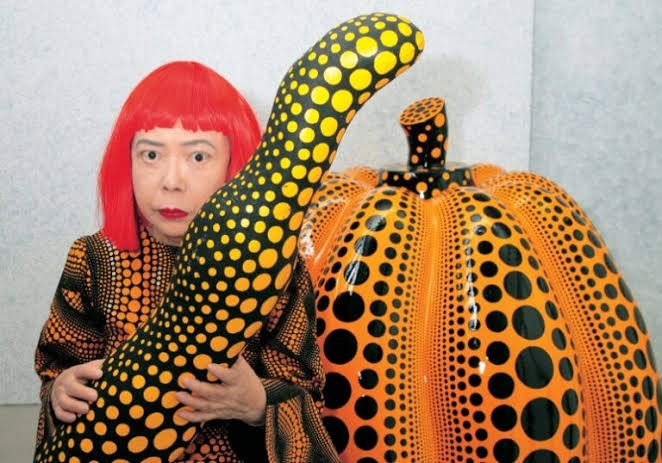
The art world is mourning the death of , the visionary Japanese artist whose extraordinary imagination transformed deeply personal struggles into one of the most recognizable artistic universes in modern history.
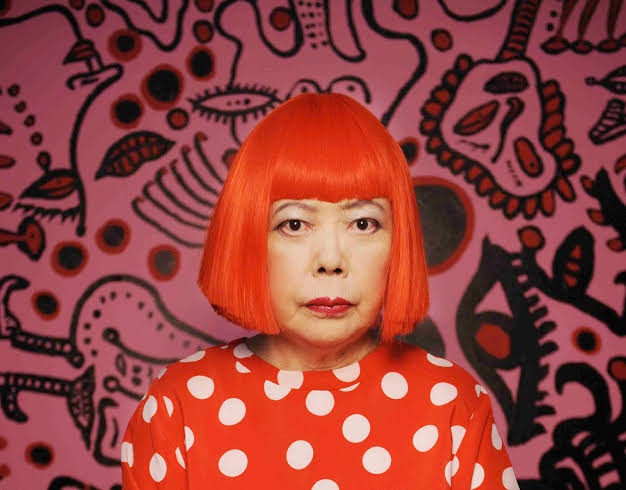
Kusama died at the age of 97 at a hospital in Tokyo on August 14, 2026, with her death announced publicly by her studio on August 27. According to the official announcement, she continued painting until her final days, maintaining a remarkable creative commitment that lasted for decades.
For generations of art lovers, Kusama’s name became inseparable from polka dots, giant pumpkins, hypnotic repetition and dazzling Infinity Mirror Rooms. Yet behind those joyful and instantly recognizable images was a far more complex story: the story of an artist who spent her life confronting visions, fears and psychological struggles through relentless creation.
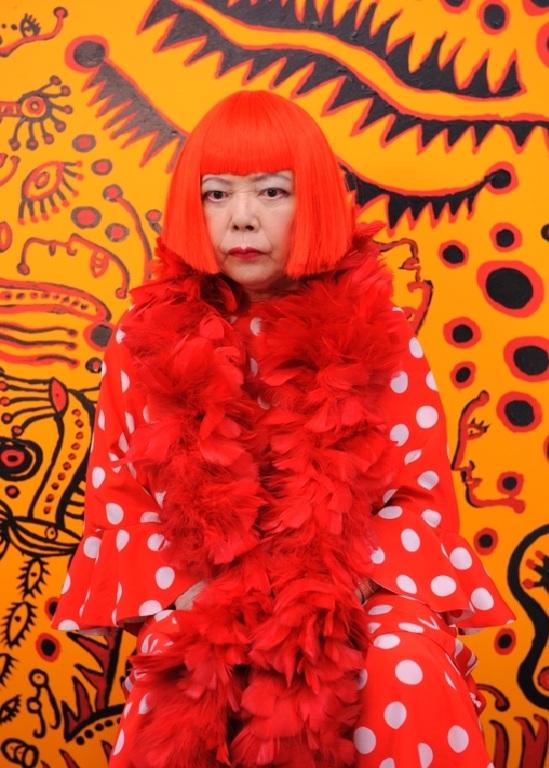
A Childhood Filled With Visions
Born in Matsumoto, Japan, in 1929, Kusama began experiencing vivid hallucinations as a child. She described seeing patterns and objects multiply around her, with flowers, dots and other forms seemingly taking over her surroundings.
Rather than allowing those experiences to silence her creativity, Kusama began drawing and painting what she saw.
That decision would ultimately define her life.
The dots that later covered enormous canvases, sculptures, clothing and entire rooms were not simply a decorative artistic choice. They emerged from Kusama’s intensely personal way of seeing the world. Repetition became a language through which she could confront the overwhelming images in her mind.
Art was not merely a career for Kusama. It became a means of survival.
From Japan to the New York Avant-Garde
Kusama eventually left Japan and moved to New York, where she became an important figure in the city’s experimental art world during the late 1950s and 1960s.
There, she developed her famous Infinity Nets paintings—vast surfaces covered with painstakingly repeated patterns that seemed to stretch beyond the boundaries of the canvas.
She also experimented with sculpture, performance, fashion, writing and installation art. Her work challenged conventional ideas about gender, sexuality, politics and artistic identity.
Although she would later become one of the most famous artists on the planet, recognition did not come easily. Kusama spent years working at the edges of an art establishment that often failed to give her the recognition she believed her innovations deserved.
Yet she continued.
That persistence would eventually become one of the defining features of her legacy.
The Birth of an Infinite Universe
Perhaps no works better represented Kusama’s artistic philosophy than her immersive mirror installations.
Inside an Infinity Mirror Room, walls of mirrors multiply lights, objects and reflections until the physical boundaries of the room appear to disappear. Visitors are surrounded by what feels like an endless universe.
The experience can make a person feel simultaneously important and insignificant—a single human figure suspended within apparent infinity.
This idea was closely connected to one of Kusama’s central artistic concepts: self-obliteration.
Through repetition, reflection and visual infinity, Kusama explored the possibility of the individual dissolving into something larger than themselves. Her art repeatedly asked viewers to consider where the self ends and the universe begins.
Decades after she first explored these ideas, Infinity Mirror Rooms became a global cultural phenomenon, attracting enormous crowds to museums around the world.
The Pumpkin That Became an Icon
Alongside the polka dot, the pumpkin became one of Kusama’s most beloved symbols.
Her monumental pumpkin sculptures—often painted in brilliant yellow and covered with dark dots—became instantly recognizable across the world.
To many viewers, they appeared playful and joyful. But, like much of Kusama’s work, the pumpkins also carried personal significance rooted in her childhood and imagination.
Over time, these sculptures became cultural landmarks, appearing in museums, galleries and outdoor installations. Their simple form and extraordinary visual identity demonstrated one of Kusama’s greatest strengths: her ability to turn a deeply personal symbol into something universally recognizable.
A Kusama pumpkin was never just a pumpkin.
It was part of an entire universe.
A Life of Relentless Creation
Kusama’s life was marked by significant psychological struggles. After returning to Japan, she voluntarily entered psychiatric care in Tokyo in 1977 and lived for decades in a psychiatric hospital while maintaining a nearby studio where she continued to work.
Rather than ending her career, that arrangement became part of her remarkable creative routine.
For decades, Kusama continued moving between the stability of her living environment and her studio, producing paintings, sculptures, installations, novels and poetry.
Her later-life success was particularly remarkable because it proved that artistic influence is not always immediate.
After periods of relative obscurity, Kusama eventually received international recognition on an extraordinary scale. Major museums organized exhibitions of her work, audiences lined up for hours to experience her installations, and her distinctive visual language became recognizable even to people who had never considered themselves followers of contemporary art.
An Artist Who Never Put Down Her Brush
What makes Kusama’s death especially significant is not simply the loss of a famous artist, but the conclusion of an astonishingly long creative life.
Her studio said she continued painting until her final days.
That fact captures the essence of Kusama’s story.
For her, art was not something separated from life. Art was life.
From childhood hallucinations to international museum exhibitions, from personal isolation to global celebrity, Kusama repeatedly transformed the experiences that might have defeated her into creative energy.
She did not wait for her struggles to disappear before creating.
She created through them.
A Legacy Beyond Polka Dots
Yayoi Kusama leaves behind far more than a collection of famous paintings and installations.
She leaves behind an artistic philosophy built around persistence, imagination and the refusal to allow suffering to have the final word.
Her work demonstrated that the mind’s most frightening and confusing experiences could sometimes be transformed into beauty. Her dots became galaxies. Her mirrors became infinite worlds. Her pumpkins became monuments.
And the visions that once overwhelmed a young girl in Japan eventually became images recognized by millions of people across the planet.
Kusama spent nearly her entire life creating.
Now, even in death, her artistic universe continues.
Visitors will still step into her mirrored rooms and watch themselves multiply into infinity. They will still stand before her giant pumpkins. They will still see rooms and objects consumed by her unmistakable polka dots.
And perhaps that is the most fitting legacy for an artist who spent a lifetime searching for infinity.
Yayoi Kusama may be gone, but the universe she created has no visible end.
Her life proved that a single dot, repeated endlessly, can become a world.

Rams Rookie Quarterback Ty Simpson Captures Attention in Formal Interview Clip Shared as “Mr. Ty Simpson”

The True Causes of Dolly Parton’s Death Unveiled

Yayoi Kusama, the Artist Who Turned Hallucinations Into Infinity, Dies at 97

Shedeur Sanders’ Shocking Pro Bowl Selection and the End of an NFL Tradition

Mikey Moore Steals the Show as Tottenham Cruise Past Charlton

Jaguars Acquire Massive Offensive Lineman Daniel Faalele From Giants in Surprise 2027 Draft-Pick Trade

Newt Gingrich Demands Personal Apology From Jon Ossoff Over Natalie Harp Remarks, Accusing Democrat of Sexist Smear

Hayden Panettiere Remembered: ‘Heroes’ Star’s Disney Connection Takes on New Meaning After Her Sudden Death

Tommy John, the Enduring Left-Hander Who Changed Baseball Forever, Dies at 83

Can Michael Morales Survive Past Round One? UFC Fans Question His Takedown Defense Compared With Ian Garry’s Grit Against Islam Makhachev and Shavkat Rakhmonov

Giants Quarterback Jaxson Dart Forced Into Medical Tent After Brutal Hit, Sparking Fresh Concussion Fears
