
NEWS
Shedeur Sanders’ Shocking Pro Bowl Selection and the End of an NFL Tradition

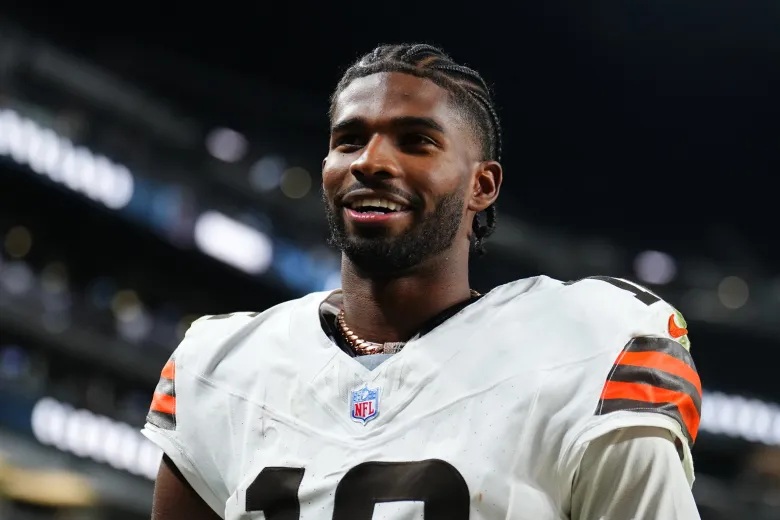
Few moments in recent NFL history captured the strange evolution of the Pro Bowl better than Shedeur Sanders being named to the 2026 AFC roster as a rookie replacement. The Cleveland Browns quarterback had entered the league as a fifth-round draft pick, endured an uneven rookie season and was not initially selected by fans, players or coaches. Yet, by January, he was officially a Pro Bowler.
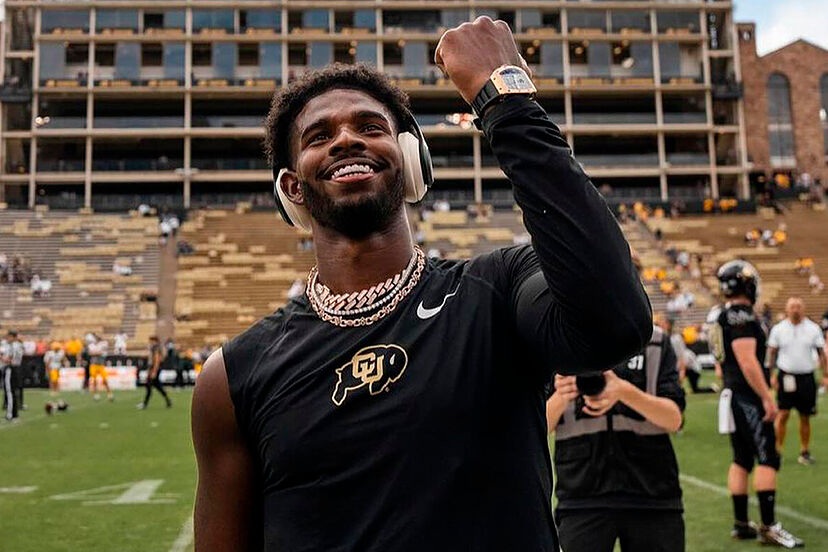
The selection immediately triggered debate—not simply about Sanders, but about what the Pro Bowl had become.
And now, with the NFL announcing on August 26, 2026, that it is discontinuing the Pro Bowl as an actual game or event, Sanders’ controversial selection has taken on an unexpected place in the history of the league’s long-running All-Star tradition. The NFL will continue recognizing 88 Pro Bowl players, but the competition itself is gone.
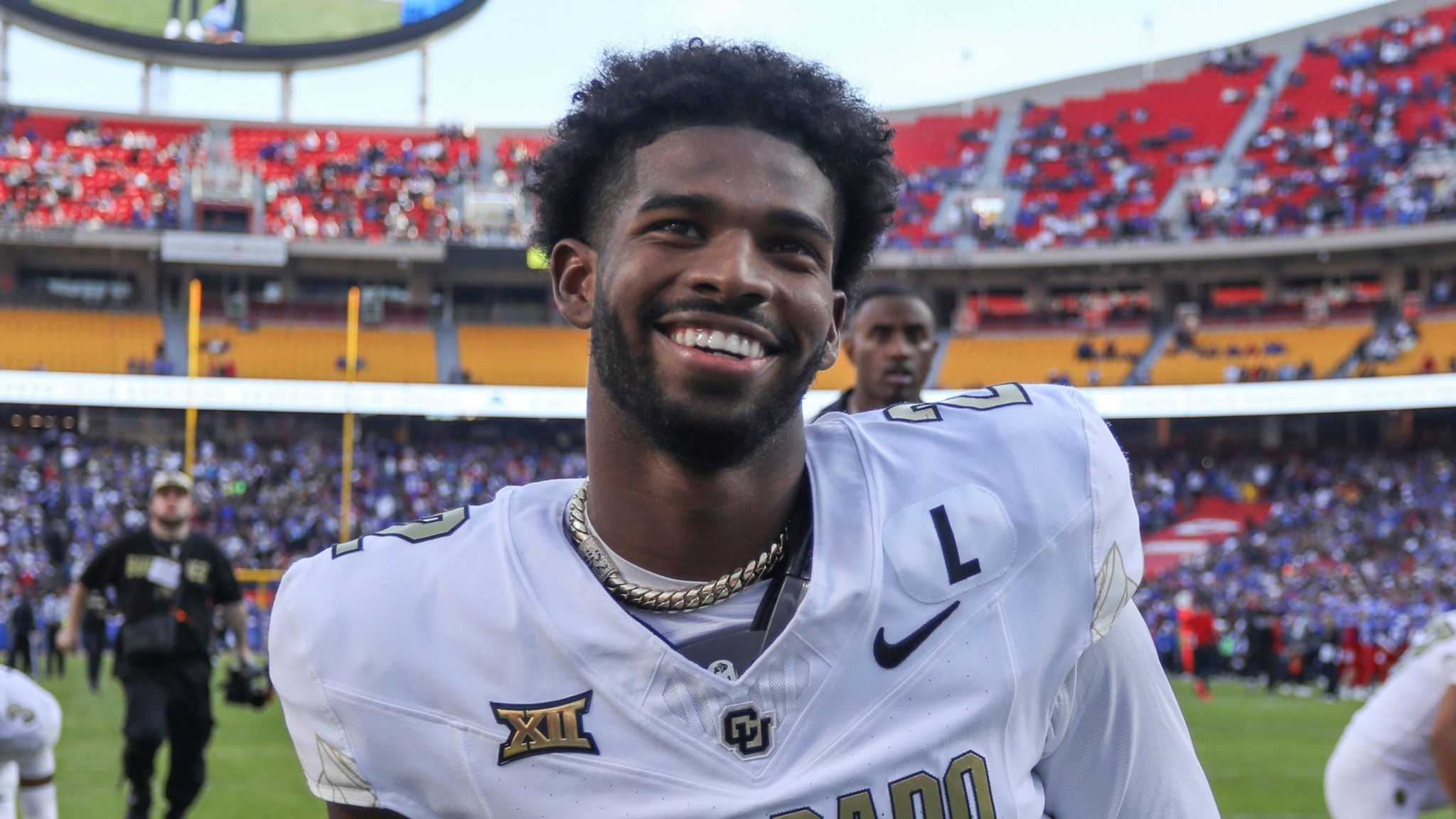
From Fifth-Round Pick to Pro Bowler
Sanders’ journey was already one of the most dramatic stories of the 2025 NFL Draft.
Once considered a potential first-round quarterback, he eventually fell to the Cleveland Browns at No. 144 overall in the fifth round. His rookie season was equally unpredictable. Sanders started seven games and completed 56.6 percent of his passes for 1,400 yards, seven touchdowns and 10 interceptions while Cleveland went 3–4 in his starts.
Those numbers hardly resembled the traditional statistical profile of a Pro Bowl quarterback.
Then came the announcement.
Sanders was added to the AFC roster as a replacement for New England Patriots quarterback Drake Maye, who could not participate because New England was preparing for Super Bowl LX. The NFL also noted that Sanders became the first Browns quarterback selected to the Pro Bowl since Derek Anderson.
For Sanders, it was an extraordinary personal achievement.
For critics, however, it represented something else: evidence that the Pro Bowl’s standards had become increasingly difficult to define.
Why Fans Were Furious
The controversy was not necessarily about Sanders’ talent.
Sanders had demonstrated flashes of legitimate NFL ability. His 364-yard, four-touchdown performance against Tennessee was one of the highlights of his rookie campaign, and he earned NFL Rookie of the Week honors following that performance.
The problem was the word “Pro Bowl.”
For decades, the designation has carried the implication that a player was among the best performers at his position during the season. Sanders’ seven touchdowns and 10 interceptions made that interpretation difficult for many fans to accept.
His selection was also the product of circumstances. He was not an original selection. He entered the roster because Maye was unavailable and because other AFC quarterbacks were injured or declined invitations.
That distinction mattered.
A replacement selection is legitimate under NFL rules, but it can still weaken the perception that the Pro Bowl represents a definitive ranking of the league’s elite players.
The Sanders controversy therefore became larger than Sanders himself.
It exposed the widening gap between the prestige associated with being called a “Pro Bowler” and the reality of how players were sometimes reaching the roster.
The Pro Bowl Had Been Losing Its Identity for Years
The NFL had already recognized that its All-Star game was struggling.
In 2022, the league announced that the traditional full-contact Pro Bowl would be replaced by the Pro Bowl Games, featuring skills competitions and flag football. The change was designed to protect players from unnecessary injury while creating a more entertaining spectacle.
But the transformation also created a philosophical problem.
The NFL was no longer asking players to play a conventional football game at the end of the season. Instead, it was attempting to turn the event into a mixture of entertainment, competition and player celebration.
That approach could protect players, but it also made the event less comparable to the regular season.
The 2026 Pro Bowl Games represented another attempt to reinvent the concept, moving the event into Super Bowl week and incorporating it into the league’s broader festivities.
Yet even those changes failed to rescue the tradition.
Then Came the Final Decision
On August 26, 2026, the NFL officially ended the Pro Bowl as an event.
The league’s decision followed years of declining interest, player withdrawals and concerns about the value of an exhibition involving increasingly large numbers of replacements. According to reports, the NFL will continue to recognize 88 players as Pro Bowlers, but there will no longer be a Pro Bowl game or equivalent event.
That means the honor survives.
The game does not.
And that is where Sanders’ controversial selection becomes particularly interesting.
It would be unfair to say that Sanders personally caused the Pro Bowl’s demise. The problems existed long before his name appeared on the roster. The league had already changed the format, eliminated the traditional contact game and experimented with skills competitions and flag football.
But his selection became an unusually powerful symbol of the problem.
A quarterback with a modest rookie statistical résumé could legitimately be called a Pro Bowler because of a chain of injuries, Super Bowl participation and declined invitations.
For many fans, that raised a simple question:
If being selected to the Pro Bowl no longer necessarily means being one of the NFL’s best players that season, what exactly does the honor represent?
Sanders Was More Symptom Than Cause
The most important point is that Sanders should not be blamed for the Pro Bowl’s collapse.
He accepted an opportunity presented to him.
He did not create the replacement system. He did not determine which quarterbacks declined invitations. He did not design the voting process. And he certainly did not decide that the NFL should eventually eliminate the event.
In fact, Sanders himself treated the selection as an enormous accomplishment.
“Thank you God. I’m beyond excited and extremely grateful,” Sanders said after receiving the honor, while acknowledging that there was still work to do.
His reaction was understandable.
For a player who had fallen to the fifth round and fought through an unpredictable rookie season, becoming a Pro Bowler represented validation.
The controversy came from what the selection meant to everyone else.
The End of an Era
The NFL’s decision marks the end of a tradition that began in 1951.
For generations of players, being selected to the Pro Bowl was one of the clearest individual recognitions available outside the All-Pro teams. It gave fans a chance to see some of the league’s biggest stars together and created another historical marker for players building their careers.
Now, that era is over.
The league is essentially separating the honor from the event. Players can still become Pro Bowlers, but they will be recognized rather than assembled for an All-Star competition.
In that sense, Sanders’ selection may ultimately be remembered as one of the final great controversies of the Pro Bowl era.
Not because he was responsible for ending it, but because his unlikely selection perfectly illustrated the questions that had been surrounding the event for years.
A Strange Legacy for Shedeur Sanders
There is an irony to the entire story.
Sanders entered the NFL as a fifth-round pick after one of the most talked-about draft slides of the year. He then became a Pro Bowler despite playing only seven games as a rookie and producing numbers that did not traditionally scream All-Star.
Now, just months after his selection, the NFL has eliminated the event itself.
That does not erase Sanders’ achievement. He will officially remain a Pro Bowler, and the honor will remain part of his NFL résumé.
But history may remember his selection for another reason.
It arrived at precisely the moment when the Pro Bowl’s credibility, purpose and future were being questioned more intensely than ever.
The NFL’s All-Star game did not die because of Shedeur Sanders.
But his unlikely Pro Bowl selection became a remarkably fitting symbol of why the league eventually decided that the old format had reached the end of the road.

Shedeur Sanders’ Shocking Pro Bowl Selection and the End of an NFL Tradition

Mikey Moore Steals the Show as Tottenham Cruise Past Charlton

Jaguars Acquire Massive Offensive Lineman Daniel Faalele From Giants in Surprise 2027 Draft-Pick Trade

Newt Gingrich Demands Personal Apology From Jon Ossoff Over Natalie Harp Remarks, Accusing Democrat of Sexist Smear

Hayden Panettiere Remembered: ‘Heroes’ Star’s Disney Connection Takes on New Meaning After Her Sudden Death

Tommy John, the Enduring Left-Hander Who Changed Baseball Forever, Dies at 83

Can Michael Morales Survive Past Round One? UFC Fans Question His Takedown Defense Compared With Ian Garry’s Grit Against Islam Makhachev and Shavkat Rakhmonov

Giants Quarterback Jaxson Dart Forced Into Medical Tent After Brutal Hit, Sparking Fresh Concussion Fears

Red Sox Land Adley Rutschman in Blockbuster Trade That Shakes the AL East

Boston Red Sox Shake Up the AL East with Stunning Trade for Three-Time All-Star Catcher Adley Rutschman

How Stuxnet Slowdown Iran’s Nuclear program
